

 Language
  English
 中文简体
中文简体 Español
 عربى
عربىIndustry News

Industry News
Stranded vs Solid Wire Ampacity Chart: NEC Ratings & Derating Factors
2026-06-01Content
- 1 What Determines a Wire’s Ampacity?
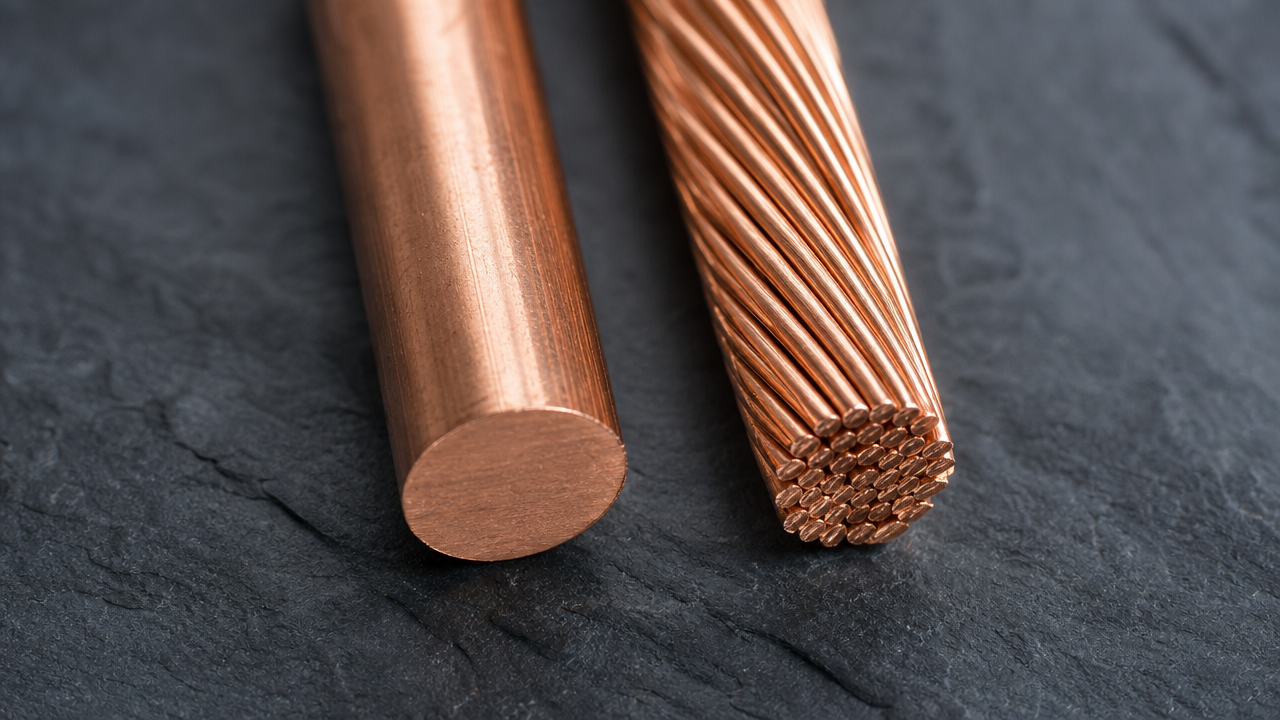
- 2 Solid vs Stranded Wire: Structural Differences That Matter
- 3 NEC Ampacity Chart: Solid vs Stranded (Side-by-Side)
- 4 Do You Need to Derate Stranded Wire? (AC vs DC)
- 5 Application Decision Matrix: When to Choose Solid vs Stranded
- 6 Installation Tips: Terminating Solid and Stranded Conductors
- 7 Common Misconceptions About Stranded Wire Ampacity
- 8 Conclusion & Product Recommendations
What Determines a Wire’s Ampacity?
A conductor’s current-carrying capacity isn’t a single magic number. It’s the result of four interacting factors, and the solid-versus-stranded question sits squarely in the last one—construction. Yet even that plays a minor role compared to the materials and environment.
- Conductor material: Copper and aluminum have different resistivities; copper carries roughly 1.6 times the current of aluminum for the same size.
- Cross-sectional area (AWG or kcmil): Larger area lowers resistance and raises ampacity. This is the dominant variable in any table.
- Insulation temperature rating: 60°C, 75°C, or 90°C insulation allows progressively higher ampacities, as long as the connected equipment terminals are rated for the same temperature.
- Ambient temperature and conductor grouping: Higher ambient heat or bundling more than three conductors forces a derating multiplier, often reducing ampacity by 25% or more.
Ampacity standards don’t differentiate between solid and stranded for good reason: the differences in effective cross-section and resistance are negligible up to 4/0 AWG at 60 Hz. Where they matter is in termination behavior, skin effect, and mechanical endurance.
Solid vs Stranded Wire: Structural Differences That Matter
Stranding doesn’t change the gross cross-section, but it alters three characteristics that engineers must manage: DC resistance, flexibility, and the way current distributes across the conductor. The table below summarizes what counts in the real world.
| Characteristic | Solid Wire | Stranded Wire | Effect on Ampacity |
|---|---|---|---|
| Construction | Single homogeneous copper rod | Multiple fine strands twisted with a defined lay | Stranding increases DC resistance by approximately 2–3% due to strand packing and inter-strand contact resistance |
| Flexibility | Low; repeated bending leads to work hardening and fracture | High; withstands vibration and flex cycles without failure | No direct ampacity change, but poor flexibility can cause unseen conductor damage in moving applications |
| Skin Effect (AC) | Current crowds toward the conductor surface | Strangely, standard stranding doesn’t eliminate skin effect but increases surface area slightly; fine stranding helps at higher frequencies | Meaningful only at AWG 4/0 and larger or at frequencies above 400 Hz; for 60 Hz power circuits, the effect is under 1% |
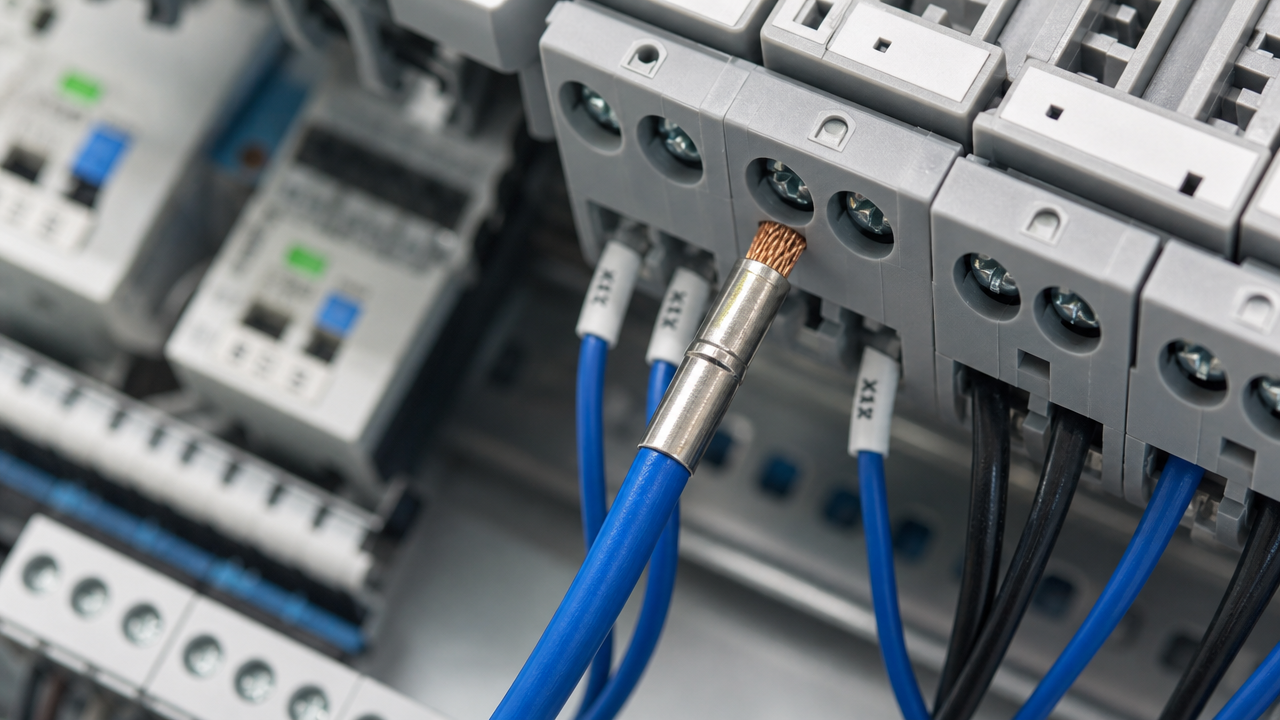
| Termination behavior | Simple compression or screw terminals work well; solid wire resists strand splay | Requires ferrules, spring-loaded terminals, or captive wire clamps to contain strands and ensure full contact | Indirectly critical; a poorly terminated stranded wire develops hot spots that mimic a derated ampacity failure |
In practice, those 2–3% resistance points don’t translate into a mandatory ampacity derating. The NEC treats solid and stranded as identical when the insulation is the same. Only when you face high-frequency currents, large cross-sections, or extreme mechanical demands does stranding force a design choice.
NEC Ampacity Chart: Solid vs Stranded (Side-by-Side)
For typical power wiring, the answer is straightforward: use the same ampacity values for both solid and stranded copper conductors. The National Electrical Code Table 310.16 provides one set of numbers, and they apply to any stranded or solid conductor of identical AWG and insulation, provided the temperature ratings match. Here is the definitive reference for copper conductors with not more than three current-carrying wires in a raceway or cable.
| AWG or kcmil | 60°C (140°F) | 75°C (167°F) | 90°C (194°F) |
|---|---|---|---|
| 14 | 15 | 20 | 25 |
| 12 | 20 | 25 | 30 |
| 10 | 30 | 35 | 40 |
| 8 | 40 | 50 | 55 |
| 6 | 55 | 65 | 75 |
| 4 | 70 | 85 | 95 |
| 3 | 85 | 100 | 115 |
| 2 | 95 | 115 | 130 |
| 1 | 110 | 130 | 145 |
| 1/0 | 125 | 150 | 170 |
| 2/0 | 145 | 175 | 195 |
| 3/0 | 165 | 200 | 225 |
| 4/0 | 195 | 230 | 260 |
The subtlety appears in high-current AC circuits. Because stranded conductors exhibit marginally higher AC resistance at larger sizes, designers sometimes apply a 1–3% capacity discount above 2/0 AWG when harmonics are present. But for standard 60 Hz building wiring, the NEC numbers are your benchmark—unchanged for solid vs. stranded.
Do You Need to Derate Stranded Wire? (AC vs DC)
The short answer: for DC circuits and for virtually all AC power circuits below 4/0 AWG, no derating is required because of stranding alone. However, several specific conditions can trigger a modest adjustment. Being aware of them prevents unnecessary conservatism—or dangerous oversight.
Derating only becomes a real consideration when one or more of these conditions occur:
- Large cross-section AC circuits (≥ 3/0 AWG): The increased skin effect in stranded conductors can raise effective resistance by 2–3% at 60 Hz, suggesting a proportional ampacity reduction if the conductor operates near its thermal limit.
- High harmonic content: In feeders serving VFDs or UPS systems, harmonic currents at multiples of 60 Hz amplify skin effect. Derating factors can climb to 5–8%, requiring a larger conductor or shifted insulation class.
- Elevated ambient temperature or multiple conductors: The standard NEC derating multipliers apply regardless of conductor type, but they compound with any stranding-factor derate. For instance, a stranded 4/0 AWG at 40°C ambient with harmonic current might need a combined derate of 15% or more.
- Stranding factor in fine-wire constructions: Extremely fine stranding used in photovoltaic cables or test leads can increase DC resistance by 5–8% compared to standard stranding. This is a design specification—check the manufacturer’s resistance per foot, not just AWG.
A practical example: You select a 3/0 AWG stranded THHN conductor with a 75°C terminal rating, good for 200 A per the table. In a standard motor circuit at 60 Hz, you can load it to 200 A. If the same circuit feeds a VFD with 30% THD current, you might limit it to 190 A to account for increased skin effect heating—a conservative step that avoids insulation degradation over time.
Application Decision Matrix: When to Choose Solid vs Stranded
Choosing between solid and stranded isn’t driven by ampacity alone—it’s driven by mechanical environment, frequency, and installation method. The matrix below condenses the decision logic for most projects.
| Application Scenario | Fixed Installation | Frequent Flexing / Vibration |
|---|---|---|
| Low Frequency & High Current (building feeder, motor circuit, distribution) |
Solid or standard stranded; identical ampacity, solid preferred for cost and simple terminations | Stranded (Class B or C) with flexible insulation; solid would fail from fatigue |
| High Frequency / Signal / Control (VFD output, audio, instrumentation) |
Fine-stranded or litz wire to counteract skin effect and maintain signal integrity | Extra-fine stranded (Class K or M) with high strand count; use crimped ferrules for durable connections |
For building wiring inside conduit, solid copper remains the workhorse. But in any scenario involving movement—robotics, EV charging stations, or control panels—stranded conductors become mandatory. EV charging cables, for example, rely on finely stranded copper to survive thousands of flex cycles without cracking. When specifying aerial spans, stranded conductors are standard not for ampacity, but for mechanical resilience; our aerial insulated cables use precisely controlled stranding to balance current capacity with wind-induced vibration.
Installation Tips: Terminating Solid and Stranded Conductors
Termination quality often colors the ampacity discussion more than the wire itself. These four practices keep solid and stranded connections performing at their rated capacity:
- Match the terminal to the conductor. Screw terminals with a pressure plate work for both, but stranded wire should be twisted tightly or—better—dressed with a ferrule to prevent individual strands from splaying and reducing contact area.
- Apply correct torque. Under-torqued terminals develop high resistance and heat; over-torqued solid wire can crack. Follow manufacturer torque specs, typically 12–20 in-lbs for 12–10 AWG and 25–35 in-lbs for 8 AWG.
- Pre-tin stranded ends only when required. Soldering the tip before screwing is acceptable where terminal design demands it, but never rely on solder as the sole mechanical fixation in high-vibration locations—it cold-flows under pressure.
- Inspect the strip length. For stranded wire, too much exposed bare copper invites flash-over or stray strands; too little and insulation gets caught under the terminal. Aim for 3/8 to 7/16 inch of bare conductor depending on size, and check that no loose strands are visible.
Common Misconceptions About Stranded Wire Ampacity
Myths about stranded ampacity persist even among experienced tradespeople. Here’s what the data says:
- Myth: “Stranded wire always carries less current than solid.” Fact: For the same AWG and insulation, the NEC ampacity is identical. Only at large sizes or high frequencies does a measurable difference appear, and even then it’s typically under 3%.
- Myth: “You must derate all stranded conductors in AC circuits.” Fact: Standard 60 Hz wiring sees no derating for stranding. The real derating triggers are temperature, conductor count, and harmonic content—not solid vs. stranded construction.
- Myth: “Fine-stranded wire has lower ampacity because of more air gaps.” Fact: The cross-sectional area of copper remains the same; the higher resistance comes from the longer path each strand follows and inter-strand contact, which is engineered into the product. Designers use the manufacturer’s resistance data, not a blanket derate.
Conclusion & Product Recommendations
Solid and stranded wires of the same gauge are ampacity peers under the NEC. The choice hinges on flexibility, installation environment, and frequency. In fixed, low-vibration settings, solid is cost-effective; in anything that moves, stranded pays for itself in reliability.
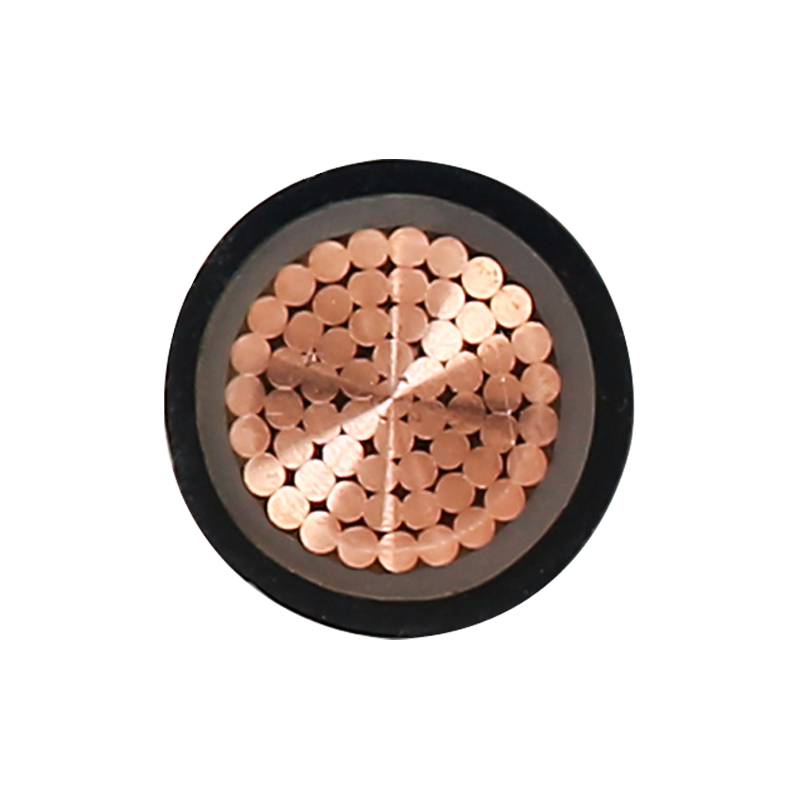
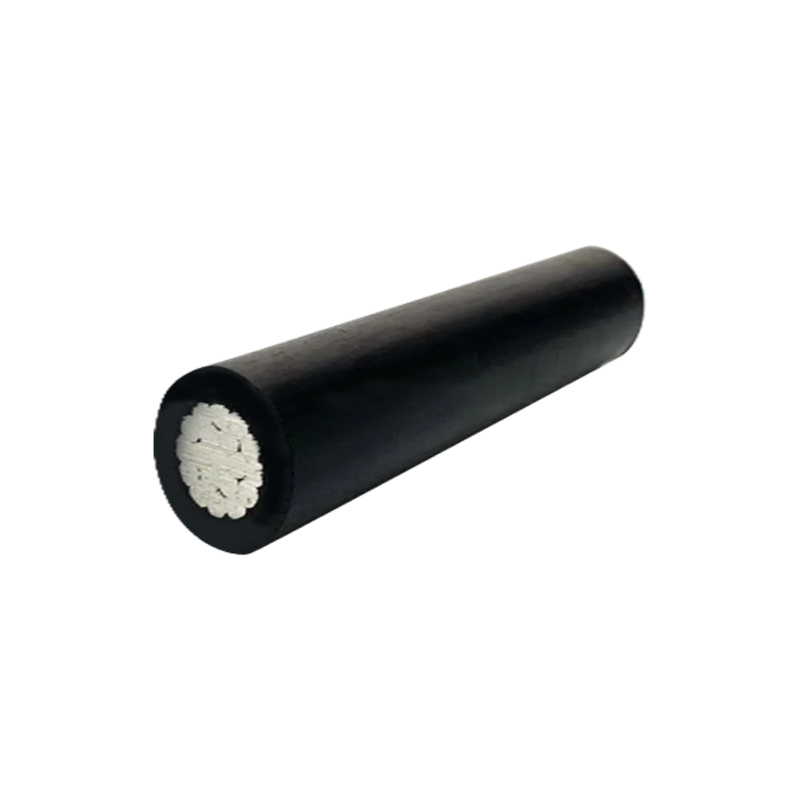
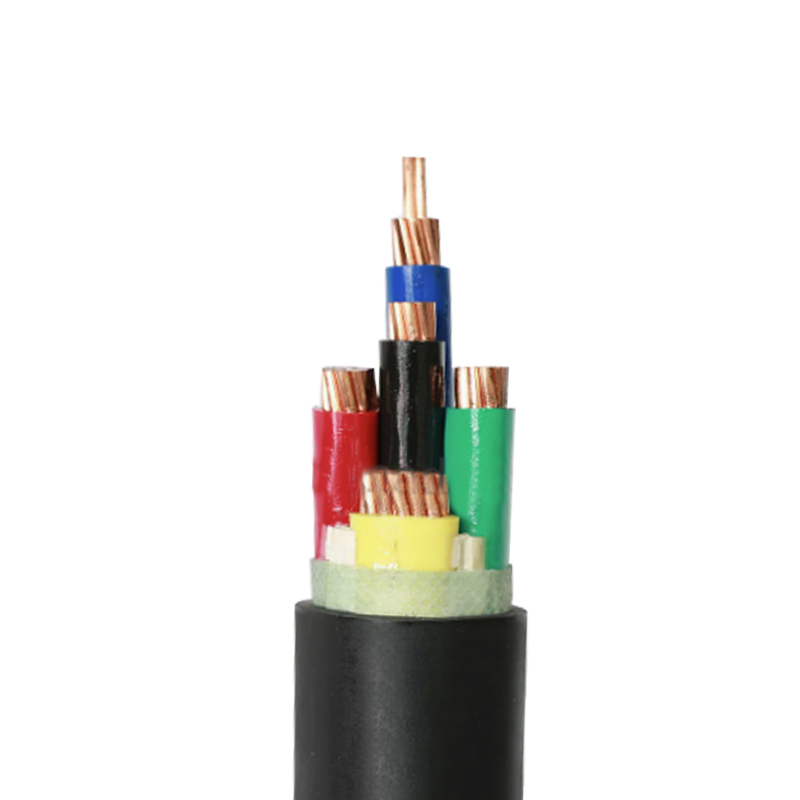
For projects demanding high-quality stranded conductors matched to the right application, our product lines cover the spectrum. XLPE-insulated power cables from 0.6/1 kV deliver stranded flexibility for building and industrial feeders. In electric vehicle infrastructure, EV charging cables combine finely stranded copper and durable insulation to endure constant handling and flexing. And for overhead distribution where stranding is non-negotiable, our aerial insulated cables balance ampacity, strength, and long-term resistance to Aeolian vibration.
PREV: 10 AWG Wire Ampacity: How Many Amps Can 10 Gauge Handle? (NEC 2026)
NEXT: Metal Clad Cable 101: Definition, Types, Cost & Installation Guide
Contact Us
Your email address will not be published. Required field are marked*


Choosing our wires and cables means choosing safety, reliability, and professionalism.

 +86-17826659260
 +86-0510-87203139
 West of Huanzheng Road, Guanlin Town, Yixing City, Wuxi City, Jiangsu Province, China