

 Language
  English
 中文简体
中文简体 Español
 عربى
عربىIndustry News

Industry News
10 AWG Wire Ampacity: How Many Amps Can 10 Gauge Handle? (NEC 2026)
2026-06-05Content
- 1 What Is the Standard Ampacity of 10 AWG Wire?
- 2 10 AWG Copper vs Aluminum: Ampacity Differences You Must Know
- 3 How Distance Affects 10 AWG Wire: Voltage Drop Calculations
- 4 Can 10 AWG Wire Handle 50 Amps? The Short Answer and Exceptions
- 5 5 Factors That Change 10 AWG Wire Ampacity
- 6 10 AWG Wire for Common Applications: EV Charger, Solar, Home Circuits
- 7 10 AWG vs 8 AWG vs 12 AWG: When to Upgrade or Downgrade
You’re wiring a new 30‑amp EV charger in a detached garage 80 feet from the main panel. You grab a roll of 10 AWG THHN, certain it’s rated for the job. The moment the charger trips on low voltage, you realize distance has stolen enough power to fall below code. That 30‑amp circuit is delivering less than 27 amps worth of effective voltage—and the wire is overheating.
The safe ampacity of 10 gauge wire isn’t a single number. It’s a sliding scale governed by insulation material, ambient temperature, and how many other conductors are packed alongside it. This article breaks down exactly how many amps 10 AWG wire can handle under every critical condition, with the NEC 2026 tables as your reference.
What Is the Standard Ampacity of 10 AWG Wire?
According to NEC Table 310.16, the ampacity of a 10 AWG copper conductor depends entirely on the temperature rating of its insulation. In residential wiring with NM‑B cable (rated 60°C), you’re limited to 30 amps. If you pull individual THHN conductors through conduit—a setup rated for 75°C—you can safely carry 35 amps. With specialized 90°C insulation found in many industrial cables, the same 10 AWG reaches 40 amps.
These numbers assume no more than three current‑carrying conductors in a raceway or cable, and an ambient temperature of 30°C (86°F). The moment you add more conductors or higher heat, the ampacity shrinks dramatically. And there’s a legal catch that stops most electricians right at 30A.
| Insulation Temperature Rating | Copper (Amps) | Aluminum (Amps) |
|---|---|---|
| 60°C (140°F) | 30 | 25 |
| 75°C (167°F) | 35 | 30 |
| 90°C (194°F) | 40 | 35 |
NEC 240.4(D) explicitly limits the overcurrent protection for 10 AWG copper to 30 amps in most general branch circuits, regardless of the insulation’s higher temperature tolerance. Exceptions exist for motor loads and certain industrial equipment where the breaker serves only as short‑circuit protection, but these require the conductor’s ampacity to still meet the full‑load current and be protected by a separate overload relay. For a typical home, 30 amps is the enforceable ceiling.
10 AWG Copper vs Aluminum: Ampacity Differences You Must Know
Aluminum wire is about 60% as conductive as copper by volume, so a 10 AWG aluminum conductor carries roughly 83% of the current that copper does—25A in the 60°C column versus 30A. This gap widens with temperature rating. Builders often choose aluminum for feeder cables and overhead service drops to save cost and weight, but you must use CO/ALR‑rated terminals and antioxidant joint compound to prevent oxidation and thermal runaway.
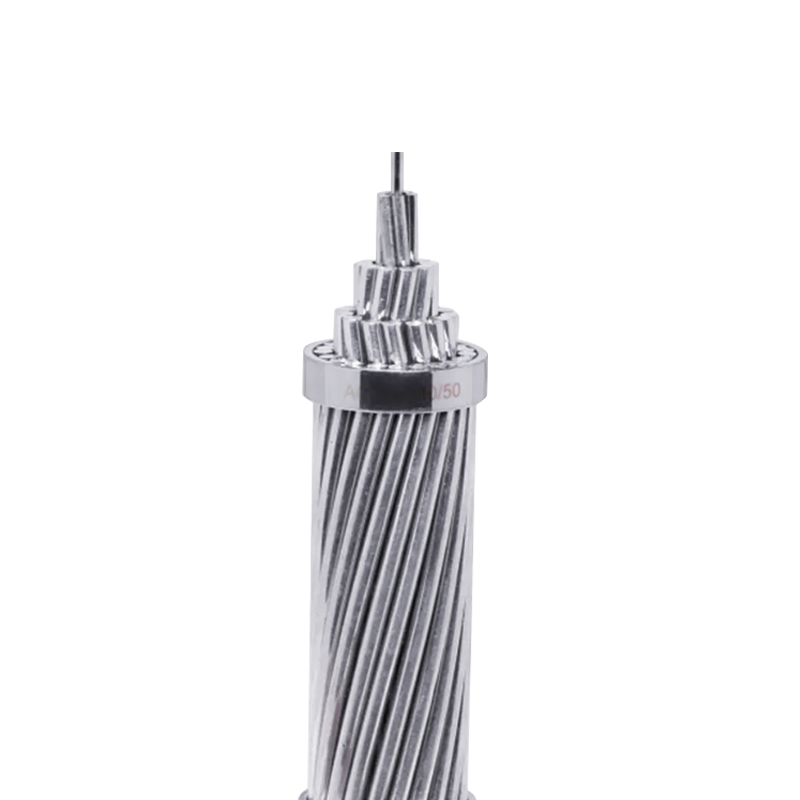
To match the 30A capacity of 10 AWG copper, you would need 8 AWG aluminum, not 10. For overhead transmission where weight savings matter, all‑aluminum alloy conductors (AAAC) provide a corrosion‑resistant alternative to copper with similar ampacity tables. Inside a residence, any 10 AWG aluminum branch circuit still caps at 25A under NEC 2026.
How Distance Affects 10 AWG Wire: Voltage Drop Calculations
A 30‑amp load pushed through 10 AWG copper 100 feet away loses about 6.2% of its voltage on a 120V circuit—double the 3% maximum recommended by the NEC for branch circuits. The formula is straightforward: Voltage Drop (V) = 2 × One‑Way Length (ft) × Current (A) × Resistance per Foot (ohm/ft). For 10 AWG copper at 75°C, resistance is approximately 0.00124 ohm/ft.
The table below shows how far you can stretch 10 AWG before voltage drop crosses the 3% threshold on a 120V single‑phase circuit. For 240V circuits, double the distances because the percentage drop halves.
| Load Current (A) | 50 ft (one-way) | 100 ft | 150 ft |
|---|---|---|---|
| 20A | 2.1% | 4.1% | 6.2% |
| 25A | 2.6% | 5.2% | 7.8% |
| 30A | 3.1% | 6.2% | 9.3% |
For a 30A load, the maximum one‑way distance to stay under 3% voltage drop is roughly 48 feet on 120V. If your run is longer than that, upgrade to 8 AWG. On a 240V circuit, the same wire can reach about 96 feet before hitting that 3% mark—good news for many EV chargers, but still a limitation worth planning around. When in doubt, calculate using the actual operating resistance and multiply by the round‑trip length.
Can 10 AWG Wire Handle 50 Amps? The Short Answer and Exceptions
No. A 10 AWG copper wire, even with 90°C insulation, has an NEC ampacity of 40A, not 50A. Fusing current—the point where the conductor physically melts—is much higher, but that’s irrelevant to safe operation. In building wiring, the circuit breaker rating must never exceed the conductor’s ampacity after applying all correction factors. Pushing 50A through 10 AWG violates code and creates a fire hazard.
The one grey area: short free‑air wiring inside an electrical chassis. The “chassis wiring” column found in some engineering references suggests 10 AWG can handle up to 55A for less than 12 inches, when the wire is single and exposed to open air. This is how power supply leads and relay connections sometimes get away with it. But this is not permitted for any field‑installed building wiring. If you’re wiring a 50A range or subpanel through walls, the correct conductor is 8 AWG copper or larger.
Industrial control panels sometimes use a tap rule: a 10 AWG conductor can be fed from a 50A breaker if it runs no more than 10 feet and feeds a single motor load with its own overload protection. The wire still carries only the motor’s actual load current, far less than 50A. This is not a general‑purpose 50A circuit, and it never appears in residential work. For every household application, 10 AWG on a 50‑amp breaker is a code violation and a danger.
5 Factors That Change 10 AWG Wire Ampacity
The NEC base ampacity is only a starting point. Real‑world conditions impose derating factors that can cut your safe current capacity by 20% to 40%. Here are the five variables every installer must weigh.
- Insulation temperature rating. Moving from 60°C to 90°C insulation adds 10 amps of headroom, but your breaker terminals often force you back to the 75°C column. Always rate the circuit to the lowest‑temperature component.
- Ambient temperature. For every degree above 30°C (86°F), the wire’s ability to shed heat decreases. At 40°C ambient, a 90°C‑rated conductor derates to 91% of its table ampacity. A 60°C‑rated 10 AWG in a 50°C attic uses a correction factor of 0.71—knocking its usable ampacity down to 21.3A, effectively making it a 20‑amp wire.
- Number of current‑carrying conductors. More than three conductors in a raceway or cable triggers a bundling penalty. Four to six current‑carrying wires derate to 80% of the table ampacity (30A × 0.8 = 24A for 10 AWG); seven to nine, 70%. That instantly disqualifies a 30‑amp circuit if you have multiple circuits sharing a conduit.
- Installation method. A single 10 AWG conductor in free air can dissipate heat far better than one buried in thermal insulation or pulled through a conduit packed with other cables. Even a code‑compliant 30A circuit can overheat when stuffed into a hot attic without adequate derating.
- Load type—continuous vs non‑continuous. For any load that runs at maximum current for three hours or more, NEC 210.19(A)(1) limits the circuit to 80% of the breaker’s rating. That means a 30A breaker provides only 24A of usable continuous current—exactly why EV chargers and electric heaters often pair 10 AWG with a 20A breaker.
10 AWG Wire for Common Applications: EV Charger, Solar, Home Circuits
Different uses apply the rules differently. The following table summarizes where 10 AWG works, where it’s borderline, and when it’s simply inadequate.
| Application | Max Safe Load | Recommended Breaker | Max Distance (120V, 3% drop) | Notes |
|---|---|---|---|---|
| Residential 30A dryer or water heater | 30A (non‑continuous) | 30A | ~48 ft | Use 10/3 NM‑B; typical short runs are fine. |
| EV charger, Level 2 (240V) | 24A continuous | 20A or 30A | ~96 ft at 240V | For 24A chargers, 10 AWG works within 96ft. For 32A continuous, upgrade to 8 AWG with a 40A circuit. EV charging cables rated 450/750V often carry 90°C insulation, but the circuit must still comply with breaker terminal ratings. |
| Solar PV string wiring | 30A (derated for rooftop temps) | 30A | Based on array voltage; higher V reduces drop | In direct sun, ambient temps can exceed 40°C, requiring significant derating. High‑temperature resistant wire preserves ampacity and resists insulation breakdown in hot conduits. |
| Household 20A general branch circuit | 20A | 20A | Not limited (overkill) | 10 AWG is overkill for 20A circuits; 12 AWG is standard. Using it buys extra voltage‑drop margin for long home runs. |
Many Level 2 home chargers pull 32 amps continuously, demanding a 40‑amp breaker and at least 8 AWG. If your unit is a 24‑amp model, 10 AWG is safe as long as the distance doesn't spike voltage drop. In solar setups, a single 10 AWG combiner box output can handle 30A, but always check the derating for the worst‑case rooftop temperature, then verify the voltage drop across the DC array voltage—often 400V to 600V systems make drop negligible.
10 AWG vs 8 AWG vs 12 AWG: When to Upgrade or Downgrade
Selecting the right gauge often comes down to a three‑way trade‑off: cost, ampacity, and voltage drop over distance. The table below gives a quick side‑by‑side for a 30A load at 100 feet on 120V.
| Wire Gauge | Ampacity (75°C) | Voltage Drop at 30A, 100ft (120V) | Relative Cost (per foot) | Typical Use |
|---|---|---|---|---|
| 12 AWG | 25A* | 9.8% (unacceptable) | 1.0x (base) | 20A circuits only |
| 10 AWG | 35A | 6.2% | 1.4x | 30A circuits, short to medium runs |
| 8 AWG | 50A | 3.7% | 2.2x | 40A–50A circuits, long 30A runs |
*12 AWG at 75°C is rated 25A, but NEC 240.4(D) limits its overcurrent protection to 20A for most branch circuits, making it unusable for 30A loads.
The decision pathway is clear. For loads up to 20A and short distances, stick with 12 AWG. For 30A loads under 50 feet, 10 AWG hits the cost‑effective sweet spot. When the run exceeds 50 feet on 120V, or you are feeding a 40A continuous EV charger or subpanel, step up to 8 AWG to avoid voltage sag and meet code. If your run is only 25 feet, 10 AWG handles 30A perfectly; you save money over 8 AWG and still stay inside the voltage drop limit.
PREV: 12 vs 14 Gauge Wire: The Complete Cost & Safety Decision Guide for Homeowners
NEXT: Stranded vs Solid Wire Ampacity Chart: NEC Ratings & Derating Factors
Contact Us
Your email address will not be published. Required field are marked*


Choosing our wires and cables means choosing safety, reliability, and professionalism.

 +86-17826659260
 +86-0510-87203139
 West of Huanzheng Road, Guanlin Town, Yixing City, Wuxi City, Jiangsu Province, China