

 Language
  English
 中文简体
中文简体 Español
 عربى
عربىHome / News / Industry News / How to Choose the Right Solar Panel Wire Size for a Safe, Efficient PV System
Industry News

Content
A 400 W solar panel usually has a short-circuit current around 11 A. If that panel feeds a charge controller 25 feet away and you choose 14 AWG for both positive and negative lines, the round-trip resistance creates a voltage drop of more than 2.5 V on a typical 40 V array. That is over 5 percent of the array voltage, so the charger will deliver less power and may read voltages incorrectly. This is why solar panel wire size is not a matter of habit. It is a calculation based on current, distance, and acceptable voltage drop.
Wire that is too small can overheat, while wire that is far larger than necessary adds cost and may not fit the terminals on a charge controller or combiner box. The right choice keeps conductor temperature within its rated limit and keeps voltage drop low enough for the equipment to operate as designed.
Before opening an ampacity chart, gather three pieces of information from your system plan: the design current, the round-trip cable length, and the operating voltage of the circuit you are wiring.
For a PV source circuit, use the short-circuit current of the panel or string, not the normal operating current. A conservative NEC-style approach multiplies Isc by 1.25 for continuous operation and then by 1.25 for the charge controller or inverter input, giving a design current of about 1.56 x Isc. For an Isc of 11 A, the design current is just over 17 A. That immediately rules out 14 AWG under most 60 °C ampacity tables and makes 10 AWG the smallest safe choice.
Voltage drop occurs in both the positive and negative conductors. A 25 ft cable run means 50 ft of copper. For a given AWG size, a longer round-trip distance requires a larger wire. Measure the real route, including upward runs inside conduit and any horizontal detours, rather than using a straight-line distance between the panel and controller.
Use the actual operating voltage of the array, usually the maximum power voltage, not the nominal battery bank voltage. A nominal 12 V panel may have a Vmp near 18 V, while a larger 400 W panel often operates around 40 V. The common design limit for PV power wiring is 3 percent voltage drop, with 2 percent preferred for sensitive electronics. For a 40 V array, 3 percent equals about 1.2 V; for an 18 V panel, it is only 0.54 V. A higher system voltage makes smaller wire sizes practical without sacrificing efficiency.
AWG numbers are reversed by intuition: lower AWG means a larger conductor. The table below is a quick starting point for common DC branch circuits carrying 10 A. It uses conservative 60 °C insulation values and a 3 percent voltage drop limit. For a 12 V system, halve the 24 V lengths; for a 48 V system, double the 24 V lengths.
| AWG | 60 °C Ampacity (A) | Max Length at 24 V (ft) | Max Length at 48 V (ft) |
|---|---|---|---|
| 14 AWG | 15 | 14 | 28 |
| 12 AWG | 20 | 23 | 45 |
| 10 AWG | 30 | 36 | 72 |
| 8 AWG | 40 | 57 | 114 |
| 6 AWG | 55 | 91 | 182 |
The table is only a first pass. A 10 AWG conductor with 90 °C-rated PV insulation has a higher baseline ampacity than a compact 60 °C-rated wire, but ambient temperature on a rooftop and conduit fill both reduce how much current the cable can safely carry. For practical derating examples, see our guide to 10 AWG wire ampacity and derating guidelines.
For many small off-grid and camper installations, 10 AWG is the practical default. It has sufficient ampacity for a single 400 W-class panel, works with common MC4-style connectors, and keeps voltage drop acceptable for short runs. The risk appears when the run is longer than expected or when panels are wired in parallel.
Parallel wiring doubles the current because each panel contributes to the same pair of conductors. Two 400 W panels in parallel could produce a design current above 34 A if Isc is around 11 A per panel. That is too much for 10 AWG at 60 °C and marginal even with a 90 °C insulation rating after derating. In that case, 8 AWG or 6 AWG is the correct solar panel wire size.
Going much larger than needed is also a problem. A charge controller input terminal rated for 10 AWG may not accept 4 AWG without an adapter, and large conductors are harder to route through the small conduits typical of an RV or marine installation. Oversizing should be based on a measured voltage-drop gap, not on the assumption that bigger is always better.
The insulation and jacket of a solar cable are part of the sizing decision. A bare copper core with the right AWG can still fail early if its insulation cannot handle ultraviolet light, moisture, or the heat under a glass module.
For exposed rooftop, ground-mount, and other outdoor runs, use a conductor made for photovoltaic service. A dedicated photovoltaic cable uses cross-linked insulation and a robust outer jacket, which helps it resist sun exposure, water ingress, and conductor temperatures higher than ordinary building wire. Standard NM building cable is not a substitute.
 Photovoltaic Cable Suppliers, Company - Jiangsu Dongfeng Cable Co., Ltd.Dongfeng China wholesale Photovoltaic Cable suppliers and Photovoltaic Cable company, details: StandardThe product is manufactured accord...View Product →
THHN or THWN-2 can be acceptable inside conduit for part of a solar circuit, but exposed sections still need a sunlight-resistant and wet-rated jacket. Many installers simplify the process by using PV wire for the entire exposed run, then transition to a flexible or standard insulated cable only after the circuit enters an enclosure. If you are comparing conductor construction, our stranded vs. solid wire comparison explains flexibility, termination, and NEC derating differences.
From the charge controller to the battery bank, the current is often continuous and the voltage is lower, so a small miscalculation has a bigger effect on charging accuracy. Use stranded copper for flexibility and vibration resistance. For battery rooms or living spaces where smoke and halogen emission matter, an eco-friendly direct current cable can keep the installation cleaner while maintaining stable conductor performance.
 Eco-Friendly Direct Current Cable Suppliers, Company - Jiangsu Dongfeng Cable CoDongfeng China wholesale Eco-Friendly Direct Current Cable suppliers and Eco-Friendly Direct Current Cable company, details: StandardEnte...View Product →
Most solar wiring problems come from repeating a general rule without checking the actual conditions. The following mistakes are easy to avoid once you know what to look for.
Do not match the wire size to the module's operating current alone. Use the short-circuit current with the necessary correction factors. Also check the insulation temperature rating. A wire with a 90 °C rating may be allowed more current than the same gauge with a 60 °C rating, but only if the terminals and connectors are also rated for that temperature.
Solar charge controllers, inverters, and MC4 connectors have a specific range of conductor sizes they can accept. When the voltage-drop calculation calls for 6 AWG but the charge controller only accepts up to 10 AWG, you need a combiner box or fuse holder with larger terminals, not a hidden splice in the middle of a roof. Plan the wire run with the termination limits in mind before buying expensive cable.
A correctly sized conductor still needs overcurrent protection rated below the conductor ampacity in the actual installation condition. High rooftop temperatures, bundles of cables in a conduit, and direct sunlight all increase conductor temperature. If your installation also feeds control or instrumentation equipment, review the insulation and screening choices in our electrical equipment cable selection guide.
Sizing solar panel wire correctly starts with the design current, includes both conductors in the distance calculation, and uses the actual array voltage to judge voltage drop. A standard 10 AWG PV cable is a good baseline for a small 10 A circuit with a short run, but every installation should be checked against the real numbers.
Use the right insulation type for the location. For outdoor PV wiring, choose a dedicated photovoltaic cable. Between the controller and battery bank, a flexible stranded DC cable with low-smoke properties gives you more confidence in an enclosed space. On the AC output side of the inverter, a 0.6/1 kV XLPE/PVC insulated power cable provides a sensible margin for normal building distribution circuits.
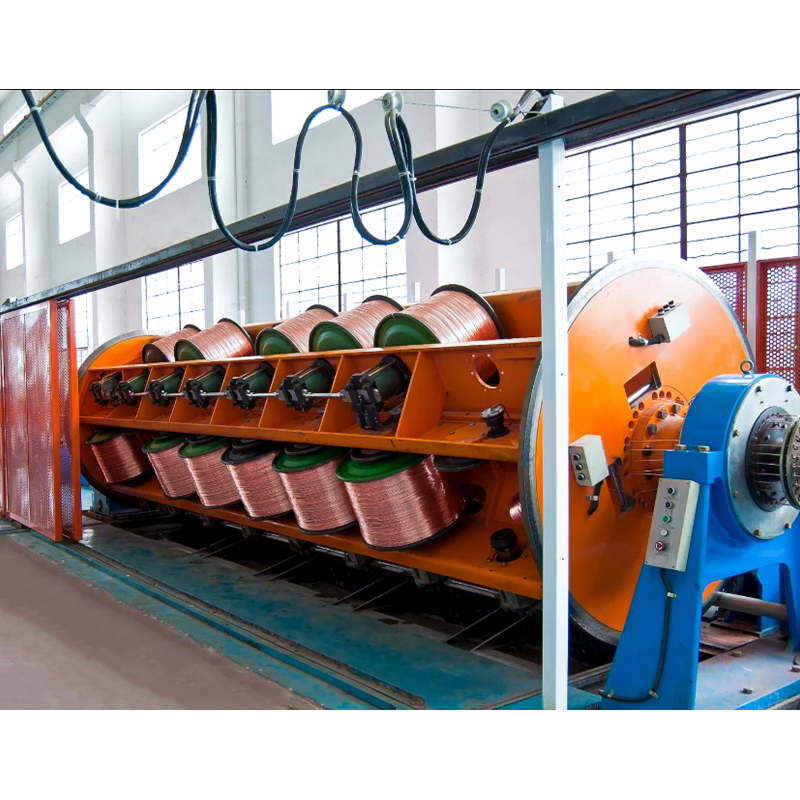 XLPE/PVC Insulated Power Cable for Rated Voltage 0.6/1kV Suppliers, Company - JiDongfeng China wholesale XLPE/PVC Insulated Power Cable for Rated Voltage 0.6/1kV suppliers and XLPE/PVC Insulated Power Cable for Rated ...View Product →
The best solar panel wire size is not the largest one available. It is the smallest gauge that satisfies ampacity, voltage drop, termination, and environmental limits for your specific run. Work through those four checks once, and you will have a system that performs safely for decades.
Your email address will not be published. Required field are marked*

Choosing our wires and cables means choosing safety, reliability, and professionalism.


 +86-17826659260
 +86-0510-87203139
 West of Huanzheng Road, Guanlin Town, Yixing City, Wuxi City, Jiangsu Province, China